The Next Project For The Farmers

As posted previously, Zina has decided that she really likes the tasks involved with wheat, bean and corn production.  She spent hours this season cutting down wheat, picking beans and corn.  As a result, next year’s addition to the growing menu is going to be dent corn and organic spring wheat along with the beans.  The total area will be around an acre.  The book I’m reading about small scale grain production lays out a detailed plan for rotating the wheat and corn behind legumes (beans and alfalfa) and clover.  This helps to build the soil and to replenish the nitrogen being extracted by the grains.

Processing all of this by hand would be a fools task.  However, it has been a challenge to find small scale equipment as most of this ridiculous country has gone to massive scale production.  Homesteading equipment is a bit hard to come by unless you are willing to buy, refurbish, and then use, antiques.

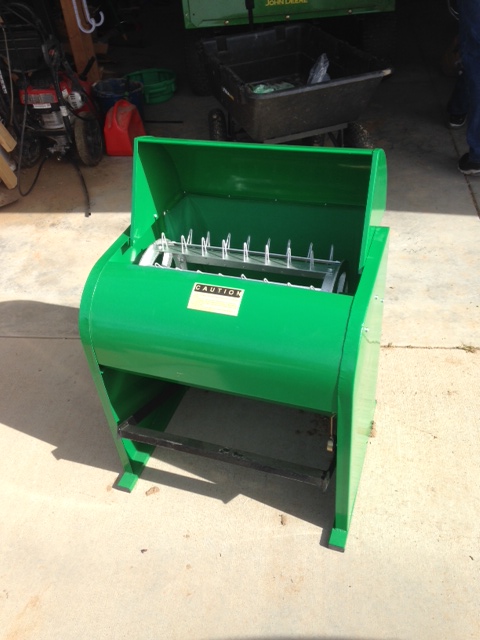
Our search has not been for nought.  We tracked down a hand cranked grain mill, a corn seeder, and a peddle powered thresher (cuts the heads off the wheat stalks).  I found a small disc harrow for the tractor and a chain link harrow.  These are for preparing the soil and covering the seeds.  I will need to rent a trailer to get the disc to the property however.  It weighs 500 pounds and I would never be able to get it out of my pickup!


Corn Seeder

photo

Treadle powered thresher

photo-2

Grain Mill


Grain Mill

Contemplating The Next Evolution

photo 2-4           photo 3-3


Vegan Dog


This post is more of me thinking it out as I type.  I believe completely that there are no mistakes and where you are currently is exactly where you should be.  Why that is the case isn’t always clear, so sometimes one has to sit down, shut up and simply let it all unfold.  Now anyone who knows me knows just how difficult that can be.  After all, if something needs fixing (even with my clients) by god it gets fixed!  There is none of this waiting around nonsense.  There is a problem, it has a solution, get after it!

Not so trying to figure out what does and doesn’t work on a farm.  We have met with success and failures this year and it is the job of a good homesteader/farmer to learn from both and improve.  So indeed, some navel gazing time is in order.  Considering that it is cloudy and looks of rain today, what better time to ponder.

The successes:  We got the place and built the majority of the infrastructure inside a year’s time.  The chickens both for eggs and meat have gone without a hitch.  The building of windbreaks and irrigation systems have worked pretty well but I need to remember to keep checking the timer systems and the associated screw joints.  I have had a couple of leaks but all in all it looks like this system will work out.  The observing field is a great place to star gaze and the new deck (that was forced to be replaced because of dry rotted wood) is a fabulous place to sit outside and just look at the expanse of the plains.  Our seeding rooms at both places are working great.  I am so pleased and thankful to have such a big space to get the plants started in the spring (although some ventilation in the farmhouse basement is in order as all of those plants made it incredibly humid – bad for the telescope).

The setbacks:  To sound like a politician, “no one could have anticipated” the massive hail beatings we took this year.  After the shock, and trying to salvage the garden at the farm, I have been hearing tales of whoa from just about everyone.  It did bring some things into focus.  Unless it is a storage crop, it simply cannot be planted out here.  Kitchen garden vegetables (those with leafy stems and produce fruit) are on a roulette wheel and cannot recover from these peltings in time to be useful.  We planned almost exclusively to encounter drought and wind.  We got the exact opposite:  Hail and thunderstorms.  So how do we adapt?  This next season the urban farm will be home to all of the kitchen garden plants (tomatoes, peppers, lettuce, spinach, kale, cucumbers, zucchini, broccoli, basil, etc).  That garden already has hoop covers and it has proven itself to produce huge amounts of vegetables.  The only thing that needs to be done to it prior to next season is to trim back the tree.  Since we cut down our aspens, the ash tree has gone nuts.  It is casting too much shade.  So this winter some of it will become firewood.  The plan is then, as we replenish our cash reserves, to wait for the greenhouse I have my eye on to go on sale.  This will give us a year to get it constructed and not disrupt the growing season.

The soil:  In the city, I was able to hand tailor the soil in the garden beds by bringing in 50 yards of planters mix to put over the rock hard clay.  That soil has been developed over the years to become a black sight to behold.  At the farm it is simply too big to do that.  It is also mostly sand.  In good organic gardening fashion I made all 18 rows, raised beds.  They average about 45 feet long and at the beginning of the season they were about 15 inches high.  Ordinarily that would be a good thing; unfortunately with the hail and thunderstorm deluges the erosion was awful.  The sandy soil wore away to the tune of more than an inch per storm.  So a couple three things need to happen:  1.  The beds need to be lower or flat to the ground.  To achieve the same result as a raised bed they will need to be broad forked so the root depth is adequate.  A six inch raise is ok but unless I can find free timbers to box in all of those beds they can’t be raised.  2.  Huge amounts of compost needs to be worked in.  I did some this year and those beds where I did have held up pretty well.  Fortunately I have about  50 yards of compost.  If that isn’t enough then we will need to check into bringing some in from off property.  3.  Each year a section is going to have to be held out of production and have cover crops like alfalfa, clover, buckwheat, beans, etc. to help get more organic matter into the ground.  4.  Because it is the winter that is the windiest time of year, to keep all of the above in place, the beds need to be covered and staked.  It appears that the rolls of burlap I ordered will come in handy.

The Plants:  I found some neat hoop covers from Grower’s Supply that should work well to keep some of the more sensitive plants covered.  Winter squash still has big leaves so they need some protection.  The beets and carrots could use some cover as well as the onions when they are young and fragile.  So some of the beds will get hoop covers similar to the one’s in the city (only more stoutly constructed).  At the farm, anything that has been started indoors shouldn’t be planted outside until the first week of June.  Not because of frost but because of the violent weather that accompanies the snow melt in the high country.  The urban farm can be planted around the week before Memorial Day as has always been the case.  At the same time we will be investigating greenhouse construction that will eventually bring all of the vegetable growing to the farm.  The urban farm will likely become a pollinator garden, along with greens and my usual huge garlic crop.

The winter project then will be to get the pig pen built and the front 5-7 acres fenced in anticipation of putting up a barn.

So the universe didn’t seem to be telling me that we were idiots for starting this venture and that we should get out.  It was showing me in pretty “right between the eyes” fashion what works and doesn’t work here.  OK OK!  I get it.

I notice that when I get going on this farm construction kick, that I see it in the fashion of it being an organic farm designed for production of veggies and such to be marketed at places like farmers markets.  That simply isn’t true.  We may do some of that in retirement, but it was never intended to be that.  It is a homestead; a little house on the prairie (literally); and its mission is to try to provide the maximum amount of food this family consumes in a year.  While we have had a learning setback this past spring, it is still well on its way to accomplishing that mission.  It is the farmer him/herself that needs to maintain the proper perspective.  It is now time to grow the place now that it is built.  The fun part, it seems, is within grasp.  I hope this helps with anyone else looking to do something like this.  Sometimes mother nature swings her bat pretty hard.  I wish you all the best successes.  Keep persevering.  What else is there?

Progress At The Farm Garden

Now that the weather has settled, things at the farm are growing.  Most of the Strawberries are leafing, we have Asparagus shoots, the Eggplant, despite the drubbing they took, have a couple of eggplants on them.  The original and now replacement peppers are leafing back up and even a couple of the tomatoes, that look like children from a refuge camp, have a couple of tomatoes.  Things are growing.  Things will continue to grow.  We are determined and relentless.  And if that wasn’t enough work, we got the posts for the new pig pen yesterday.  All in all a good day.  Mom did chicken chores, dad weeded and hoed, and even Aaron came out and pulled the alfalfa that has been growing all over the beet, carrot and onion patches.


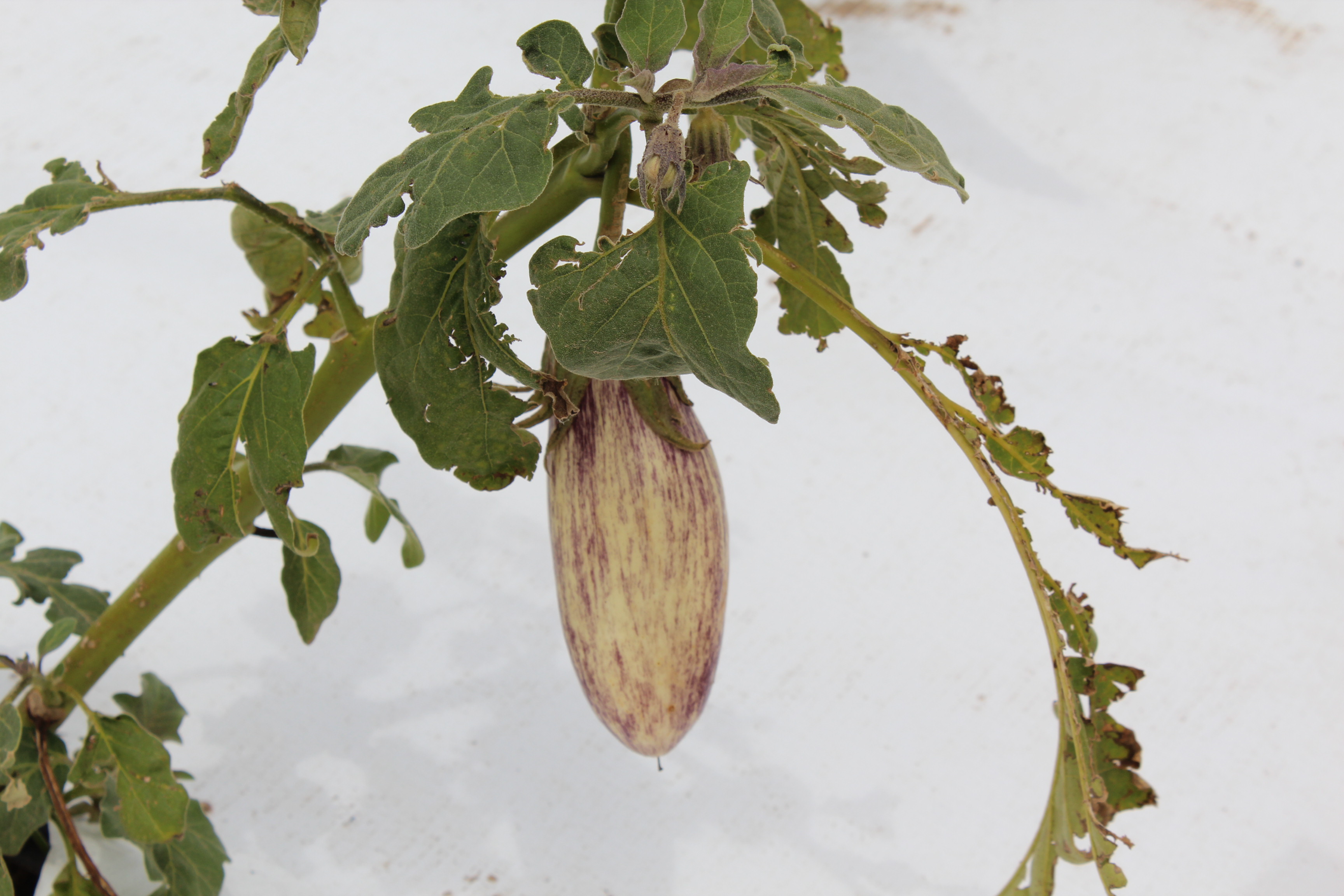
Egg Plant (you can see how badly the leaves got torn from the hail (that isn’t from bugs)

IMG_3417


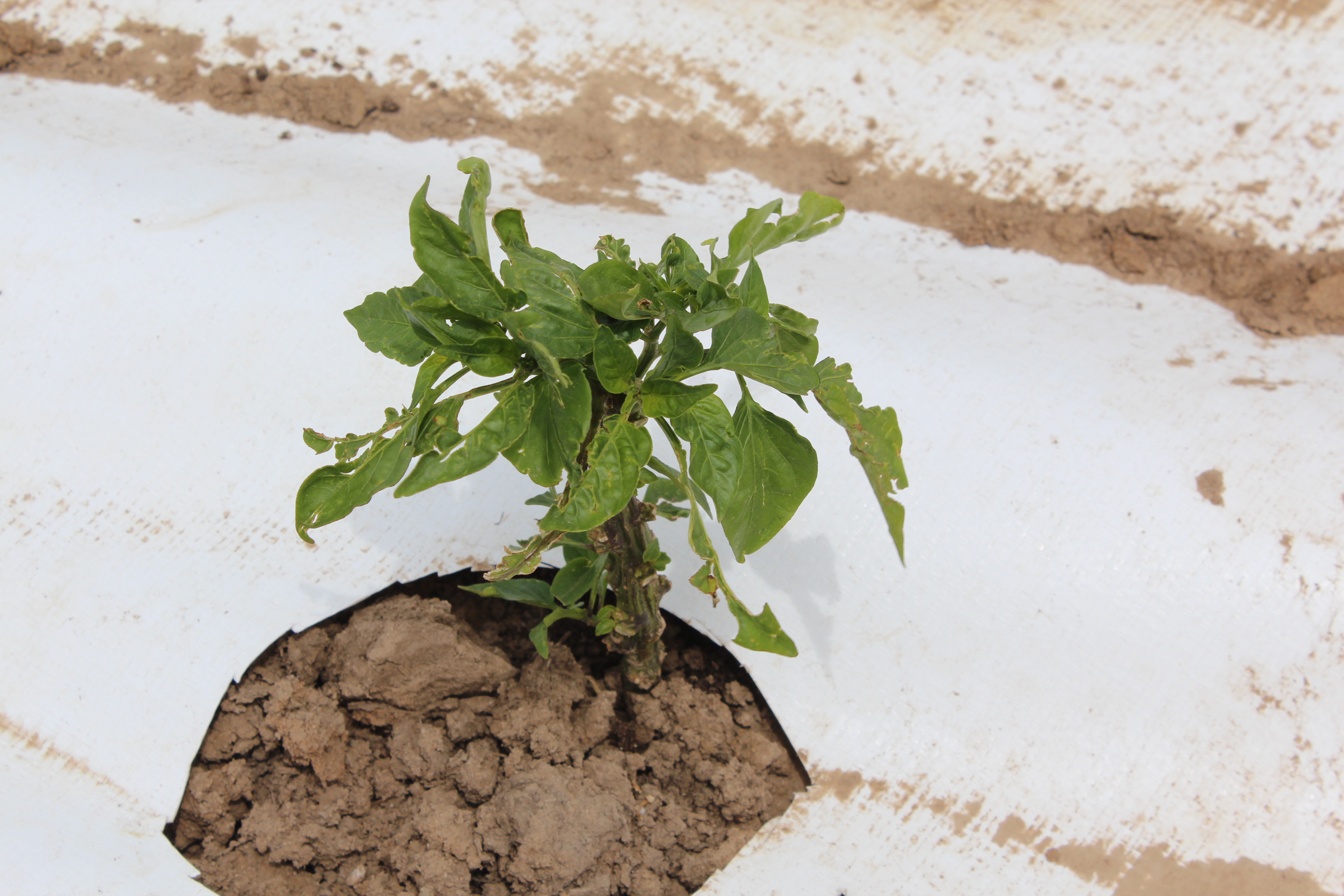
Peppers re-leafing and showing some serious determination

IMG_3418

The first shoots of the new Asparagus patch (its blurry because it wouldn’t stop blowing around)

IMG_3420

The sad tomatoes and tomatillos.  They are having a rough time recovering.

IMG_3421

Acorn squash with flower


 IMG_3423


About 200 row feet of Peaches N Cream Sweet corn.  It took two seedings to get them going because the first planting got washed away in the storms.


IMG_3428

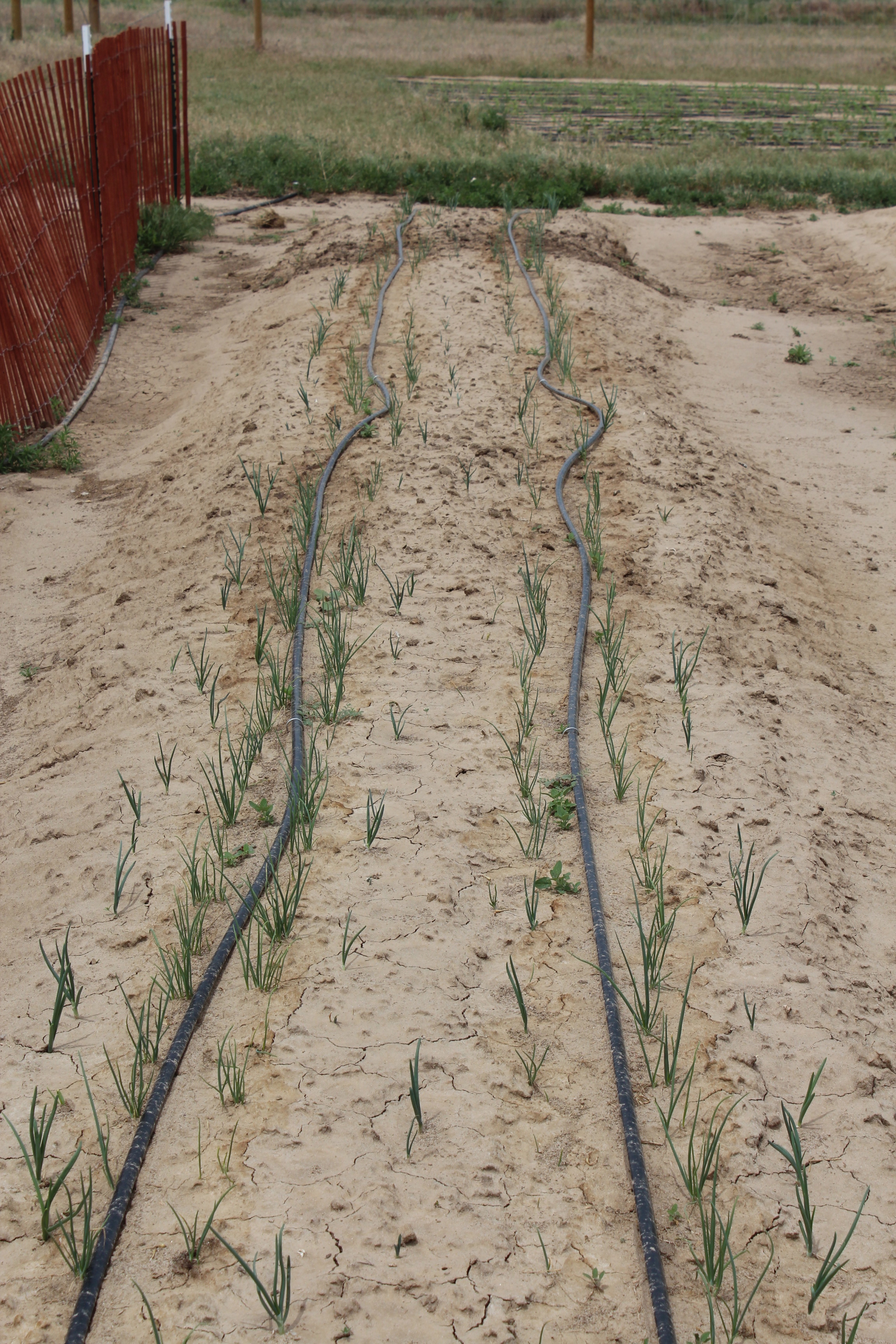
We have 400 row feet of onions.  They are a combination of Cabernet Red, Ailsa, and Copra with a couple of sets of Whites.  All seem very healthy.

IMG_3429

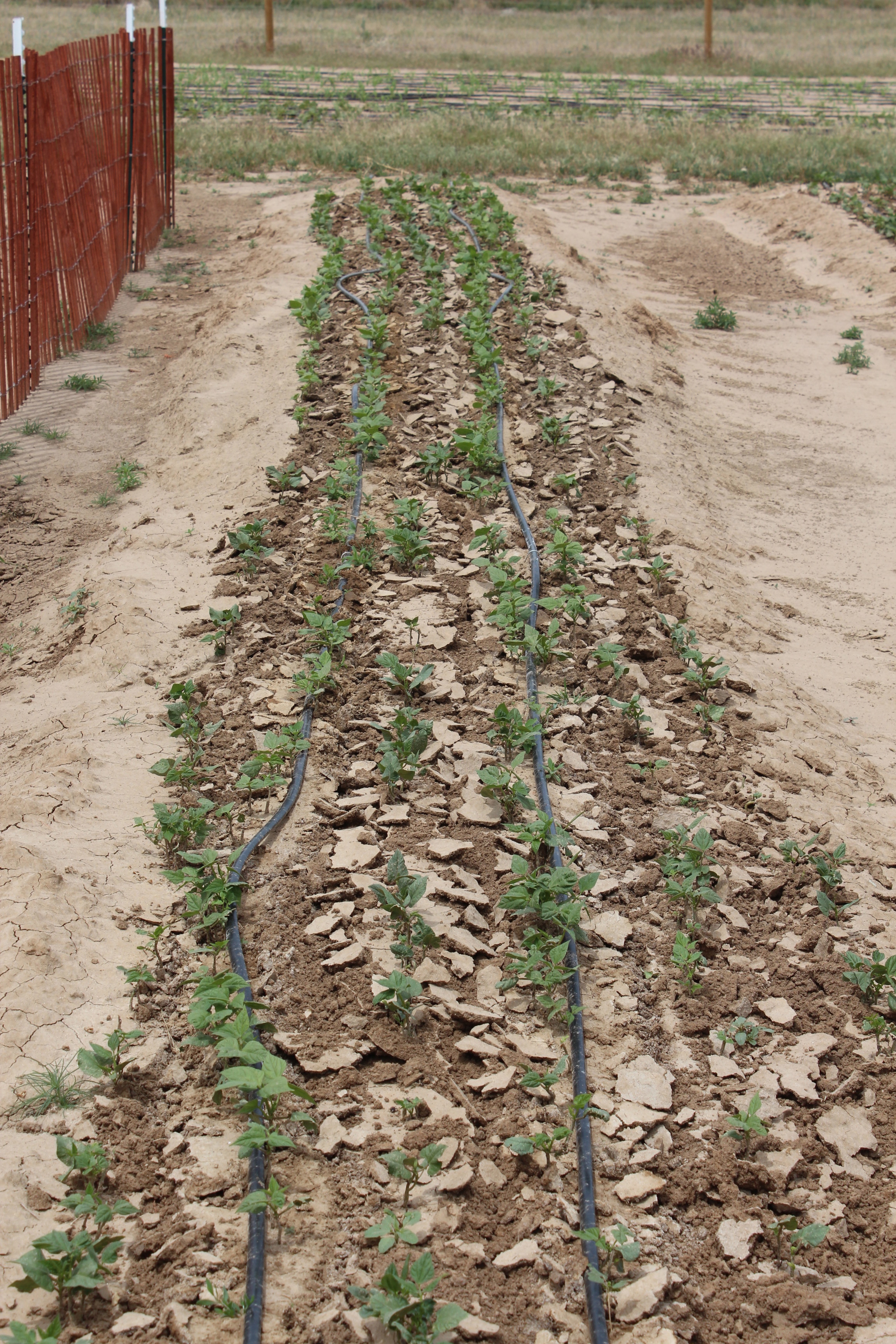
We planted somewhere on the order of 800 row feet of Black Beans.  Despite getting hammered when they were just emerging from the ground it looks like they are well on their way.  You can see in the picture that the ground got pretty crusted over from the storms.  We have been out breaking it up pretty diligently.

IMG_3430


Three different kinds of potatoes:  Reds, Kennebecs, and Yukon Golds.  All have come up  very nicely.  We are going to do our first hilling tomorrow.

IMG_3431

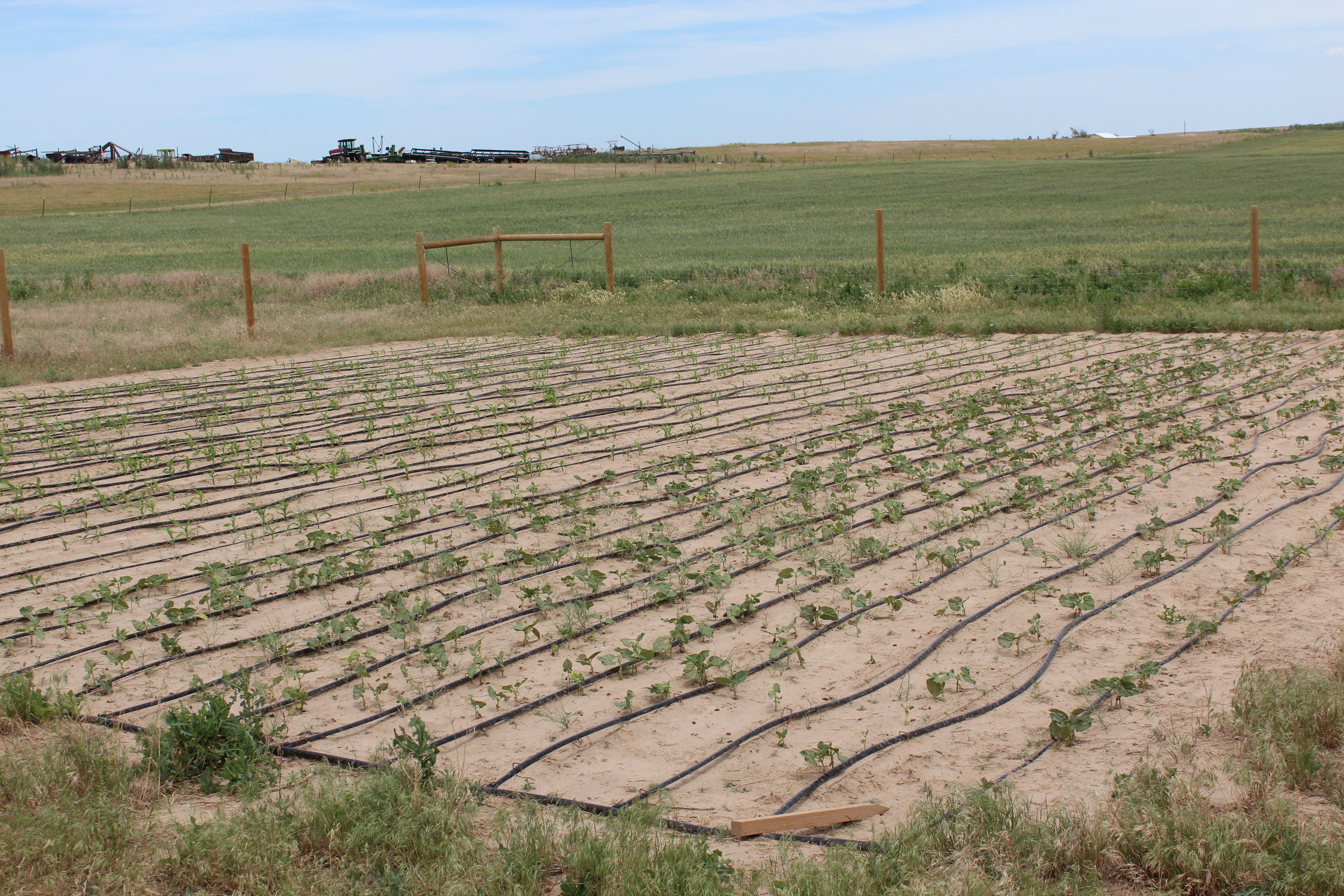
This lower patch is about 4800 square feet.  It has organic dent corn for the chickens and for corn meal (the left 2/3ds) and the right side is about 1800 square feet of kidney beans.

IMG_3432


This is harder to see as it is very early yet – Beets and two types of Carrots.


IMG_3424


The hardest part of this right now is simply keeping the soil broken up.  We are still devising ways of keeping something this big erosion protected but also covered in order to build the soil.  We have some ideas but that doesn’t help this year.  I imagine that next season, the lessons learned here, will prove invaluable.

Happy Summer Solstice To All Of My Heretic Friends!!!

Farmer Jon

Letting The Growing Environment Educate You

We finally seem to be back into the “normal” summer on the high plains.  The weather is sunny and breezy.  Even if it isn’t hot, the sun at a mile above sea level will suck the moisture out of you without you even knowing about it.  I had some issues with dehydration the past couple of days.  It is very strange to be sitting in a chair, feeling a little delirious and be able to feel your heart skipping beats.  We have begun to make sure we check our exposure time outside and ensure we have enough liquids.  While I can’t stand Gatorade, having some bananas and orange juice helps to replace potassium.  Seems to have worked. Feeling fine now.  When your heart stops beating, even for only a beat or so….. probably not a good thing.

Zina and I went out this morning and pulled out the peppers and replaced them with the ones I raised from pups.  The spindly things we put in because of the hailstorm couldn’t stand up to the deluges they got hit with afterward.  The Heirloom Purple Beauties, Emerald Greens, Poblanos, Serranos, and Anaheims all started to show re-leafing.  Their stalks were much sturdier than the store bought  plants so in they went.  We’ll see if they recover.

Whenever you move into someplace new and want to plant, you have to keep your ears and eyes to the earth.  It will teach you the things you need to know about your surroundings, in sometimes not so subtle ways, and what can and cannot be accomplished.  I think, if I have to search for a reason to have to endured all of this violent weather, it was to learn a thing or two about gardening on the high plains.

The garden in the city gets winds as well, but it is surrounded by a fence, other houses, and the beds all have hoop huts built over them.  It is very well protected.  It is also made up of 50 yards of topsoil I wagoned in so I didn’t have to amend the “cement” masquerading as soil.  Out here at the farm however, the garden is an order of magnitude larger, it now has some fences but is still exposed to direct east and west winds, the soil is sand and clay which needs nursing, and the weather will pummel the plants and one’s spirits with reckless abandon.

What we have concluded is thus:  Plants that can be directly seeded in (Beans, corn, potatoes, onions, squash, strawberries, asparagus, etc) all seem to be pretty well suited for the environment.  Even the poor Black Beans that took a direct hit from the hail storm just as they were poking their heads above ground, seem to have recovered.  So as long as we keep amending the soil, and put in some timbers to help stem the erosion, that part of the garden is pretty well underway.  The potatoes are really growing well.  The dent corn for corn meal is coming up nicely as are the Kidney beans.  The transplanted onions got hit with the hail shotgun too but are now perked up and growing.  The beets have really come up and the carrots are starting to show their hair like sprouts.

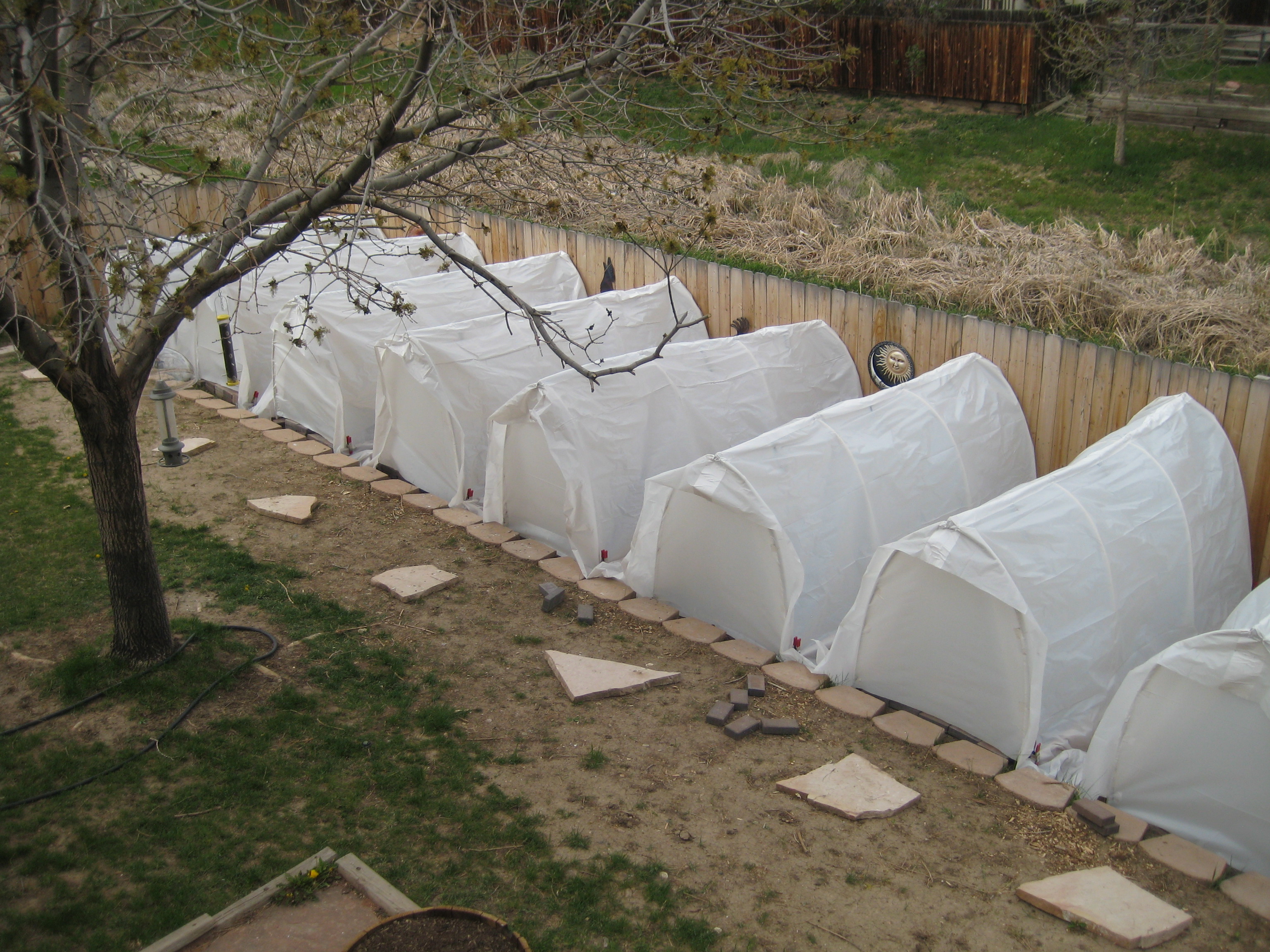
It is the big leafed plants that grow fruit that seem to be a fools errand.  The tomatoes look like starving children from concentration camps.  The peppers were stripped bare and the eggplants look like they got hit with a 12 gauge.  Things like cucumbers and Zucchini are at the other place and it looks like that was a good idea.  So if you live in a place like ours with high winds, damaging storms, clay/sand soil, and want to grow more delicate plants what does one do?  1. Either give up and not grow (not in my genetic make up) or 2.  High Tunnels!  The location of the beds for the plants just named are on a flat, level section of the garden.  In order to protect the plants, one needs to keep the elements off of them.  Greenhouses are stupid expensive but high tunnels can do the same thing at a much lower cost.  As this is our retirement place and we want to be able to garden into our geriatric years, making the investment seems to be in order.  They look like this:


IMG_1893


They can and need to be anchored into the ground to keep them solid against the wind.  They have galvanized steel framing, the doors roll up so I can get the tractor in and the sides will roll up to provide ventilation.  In the winter the plastic is taken off and stored.  In the event that there is hail damage, the greenhouse plastic can be patched – and when necessary-  replaced at a reasonable cost.

The high tunnels would fit over the existing beds and the plants grown just like one would in the garden but will have an umbrella over them.  The existing drip irrigation would be used as well.  Hoop high tunnels also can extend the growing season by a month on either end.  This will eliminate the danger we exposed the plants to by taking them outside to harden off.  They would simply go from the potting room in the basement out into the high tunnels and hopefully produce the kinds of tomatoes, peppers, cucumbers, and eggplants we have become accustomed to.

We will be looking into tunnels through FarmTek and Grower’s Supply.  I have seen some in the area and want to discuss the benefits and pitfalls.  My biggest concern at this point, although I’m sure there are more things to concern myself with, is making sure it doesn’t fly to Kansas when hit with its first good Colorado wind.  I am sure we  aren’t the first folks to do this, so I am all ears; this seems to be the most logical next step.  So live and learn.  The stuff close to the ground does well.  It is all coming up with no real issues save the erosion from the rains.  The fruiting plants….. they need protection.  So protection they will receive.  After all, its just a big version of this:

IMG_1570


Blue Sky, Floods and Relaxed Goats

It is finally clear and we have only had sprinkles the past couple of days! Perhaps the bludgeoning of our garden, wheat fields and chickens is over!  Wouldn’t that be nice.

I’ve had to go through the glass half empty/full debate in my head over the garden.  It was probably naive to think this thing would go without a hitch considering I’ve never done it before.  BUT, I hate to fail, and the less than stellar look to some of the larger leaf and fruiting plants makes one kind of ache, especially after having nurtured them indoors for 2 months.  The reality though is that there is a lot growing in a garden of lesser soil quality that I have yet to amend, and some of the most brutal storms I’ve seen in a very long time.

The tomatoes, eggplants, peppers, and tomatillos are the worst hit.  But that is only 4 beds out of 18.  The strawberries are leafing out.  WE HAVE ASPARAGUS SHOOTS EMERGING!!  The squash, onions, black beans and potatoes are all up and growing.  The beets are up and there are a few carrots showing themselves.  The sweet corn is having some trouble breaking through the crusty soil but they are coming up non-the-less.  The peppers that got hailed on are now looking better than the one’s I bought to replace them.  So tomorrow, we are pulling out the store bought hybrids that got pummeled last week and putting in the heirlooms.  So all in all, if there is any loss it will be the tomatoes and tomatillos and I have 30 tomato plants at the urban farm all doing fabulously well.  We are considering putting up a greenhouse next year to house the more delicate plants.  An article I read about increasing tomato yield has intrigued me and would involve a greenhouse no matter where the garden was located.  The corn patch, which is about a tenth of an acre was planted with corn for meal and kidney beans.  The kidney bean seeds washed away a bit but there are still bunches coming up.  The dent corn looks as though most of it is coming up.  Once some of the earlier crops are harvested, I have 5000 green bean seeds to sow and will have us busy canning into the fall.

So I think I should stick with glass half full considering the challenges we have just faced.  I am going to be going on many lumber scrounges to find some boarders for the beds.  I need to stop the erosion that happens every time it rains.  By damning it in place and mixing in lots of our manure pile and the straw we should get from the cutting and baling of the wheat field, the soil should begin to improve.  I will also be planting alfalfa on the beds, digging it in and covering them all with burlap for the winter.  Lots of work….. I can rest when I’m dead.

On my way back from the store I saw a cute sight.  It was about 75 degrees and sunny and on top of two round hay bales on the farm next to ours were two goats sleeping on top of them.  The picture is hard to see as it was from my phone but I posted them below.  One way or another, we are going to have goats.    I need poop factories and they qualify.  I don’t want horses or cows.  These guys will do nicely.  Aaron and I will begin working on our pig pen shortly as well.

The last picture is the farm across the road from us.  That isn’t a lake.  It is still undrained flooding from the past couple of weeks.  The mosquitoes are beginning to emerge.  Going to have to get out the dedicated outdoor garb and douse it with bug juice.  I hate that stuff… but I hate mosquito bites and West Nile Virus worse.

Tomorrow, while I plant the peppers yet again, Aaron will be on the business end of the diamond hoe and the garden weasel, breaking up the crust on the beds yet again.  I have half a mind to buy and replace the tomatoes.  I doubt it, as they may still yet come back.  If they get pounded again maybe they will just turn into green beans.

photo 2-3              photo 3-3


photo 1-2

Assessment … Again

The morning is now cool, beautiful, and sunny.  Oh ya… and severely muddy.  The prairie toads have re-emerged because of the moisture and are a never ending chorus of chirping.  Basil found one last night and it was pretty hard to get her to come back in the house.  Last year she ended eating one she was playing with.

The day after yet again another monstrous hail storm meets with the usual wander and assess with the morning coffee.

1.  The chickens, as usual have pulled through unscathed.  We have one roaster that is looking a little weak but that is to be expected.  We ordered 30 in anticipation of ending up with 25 and if she doesn’t make it then so far we will have only lost one.

2.  The place is a muddy mess.  The standing water is quite a sight.  The erosion in the garden is pretty serious.  Going forward that will need to be mitigated somehow.  As Zina said last night when I was giving her the hail storm play by play, “If you would have asked me last year what our greatest challenge would have been, I would have said, lack of moisture.”   Wow.  We have had more rain than I think I’ve ever seen in Colorado and there is an 80% chance of more rain over the next two days.

3.  The garden isn’t completely gone but there is a huge amount of healing to be done.

> The eggplant have been stripped of their leaves again.  If they don’t get hit again (I know, I’m smoking hopium) then they ought to come back.                                                                                There are enough leaves left that they could recover; but they really need a break from the every other day ice poundings.

> The strawberries and asparagus should be ok.

> The newly replaced peppers also have some leaves left.  They could recover but they are pretty spindly.  The funny part about this is that many of the seedling peppers that got stripped last week are starting to grow leaves back.  We may actually have to replace the replacements with the recovered originals!

> The tomatoes are anyone’s call.  The trellises kept them upright, but they look like they are ready to throw in the towel.  Again, the only thing to do is tend them and hope the hail ends.

>The onions are pretty bad.  They were seedlings and very susceptible to bad weather.  If it ever dries out I will probably replace them with sets and see what happens.

> The 4 beds of black beans should recover.  They are about 2 1/2 inches tall and the hail didn’t knock all of their leaves off.  Again, give them a chance and they will come back.

> The sweet corn doesn’t look like it is coming up.

> The potatoes are starting to come up but the beds are pretty muddy.  Hopefully they will dry up a bit so they can continue to grow without having to worry about them getting too soggy and then rot.

So maybe (fingers crossed) we can get through this.  It sure isn’t what we thought we would be contending with.  Its always so muddy you risk falling and while it is so muddy, the bindweed gets an upper hand.  I look back on June of last year and there was no weather happening like this.  These have not only been brutal and violent storms, they have been so disheartening.  You watch as the sky explodes over the farm and think, “We did everything we could do… keep telling yourself, ‘its not your fault'”.  In nature, the back breaking work doesn’t win you any rewards.  It just means you did back breaking work that is exposed to nature.  Continue on at your peril.  Because I am a pretty stubborn mule… that is exactly what I intend to do.

Musings On Planting Season

Sometimes I regret starting this blog.  There are times I feel that every move involved with trying to make this hobby farm/homestead successful is being watched like having someone watching over my shoulder.  This, of course, is my own insecurity talking.  Most everyone is pulling for us and most who follow our journey are either on this journey themselves, or understand full well why we are doing it.

This past two weeks has been quite a learning experience.  The spring melt-off in the high country certainly packs some amazing surprises.  While I have known and experienced them all in past springs, it has not been with the need to plant a half an acre organic garden attached to the experience.  Sure we have had hail at the urban farm, but all of those beds combined barely add up to two of the 18 we have here on the high plains.

We experienced two wickedly intense storms while trying to get the garden in.  I’ve posted about their severity in earlier blogs.  On top of that we watched most every day on radar, storms just as intense as the hail storm hoping and praying that they would track around us.  Fortunately they did, but the two that didn’t….. what damage they caused.

The two garden areas are on a slight decline going from west to east.  When the hail and the rain descended upon us and because of the sandy composition of the soil, we had amazing erosion.  At the base of the main garden there is now 5 to 6 inches of sediment that had washed down hill.  The surface area of most of the uncovered beds bled soil off into the walkways.  Of course, now that it has dried, it is all hard as concrete.

Seeing the forest for the trees is a skill.  As I have mentioned, and my wife is continually reminding me, this is the first year of attempting this.  It is also a giant experiment that will go on for many many years.  To expect perfection after all of the back breaking and mind numbing work that has been involved is simply unrealistic.  For that, I keep my sanity.  For that, I continue to post so that others in as difficult a landscape – or those fortunate enough to be in more opportune habitat – can learn from what we are attempting here.

One personal challenge was trying to keep it all together when my “help” (my wife, my son and my visiting mother) would hit me with a never ending barrage of questions about what to do next when I had no fricking idea.  I am pretty good at trouble shooting, but I was as mind numbed from this spring weather as anyone else was.  I felt like a worksite foreman simply faking it and hoping the project got completed.  Don’t get me wrong, It WAS a 4 person project and I am so grateful for the help, but the questions from the inquisitive eyes that were saying in my mind: “Hey perfesser, what are we going to do about XYZ?” made me want to crawl into a hole at times.  But instead…. we just kept moving forward.

I had this vision in my head as we were being pelted by grape sized hail, knowing that many of our plants would be stripped bare by the intensity, about those who have gone before.  If you have ever seen a real original homestead out here, they are smaller than a one car garage (sometimes the size of a “Tuff Shed”).  Wells were practically non-existent and yet people came out here (after driving off the natives of course) and tried to make a go of it.  One of these kinds of storms was a life destroyer.  If you lost crops or if your livestock was predated or destroyed, you were not just inconvenienced…. you were dead.  There was no “replant and go to the local grocery store” as a back up.  Crop failure for a homesteader was a terminal event.  Remembering this makes having to eat some crow when mother nature reasserts who is damn straight in control, not such a bitter pill to swallow.  On top of that, no matter what happens, the urban farm is also planted and at last glance is proceeding along nicely as usual.

The plants too are amazingly resilient.  Of the hundred pepper plants that were stripped to the stems in the hail storm, at least half have begun re-sprouting leaves.  We have already replaced them in the garden, but I am now inclined to keep them around in their pots and see what happens.  Nothing to lose.  If they recover and produce, any kind of pepper fruit, because they are heirlooms and breed true, I will simply save the seeds for next year.

So what did we learn here?  We learned that if we have big, deep, snowpack in the mountains, the spring weather is going to be severe.  As a result, plan on planting the weekend of Memorial Day and into the first week of June and not before unless it is direct seeding.

Start the plants in the grow room around the first or second week of March, not the end of February and don’t be in a big hurry to get them outside to harden off.

All of the beds MUST be diligently cared for and covered.  Straw, held down with burlap and sandbags, will help keep the beds from eroding so badly when the deluges hit.  It is one added step, but I see no other way to grow on the high plains if the beds can’t be protected from the elements.

Concentrate on a lot of root vegetables and those that can be directly seeded.  Those that have fruit on the vine so to speak, like tomatoes, tomatillos, egg plant, etc., are fragile and are the most at risk for violent weather.  They can be done but one needs to wait until the violent storm cells subside before exposing them to the elements.

Lastly, keep one’s perspective.  JAZ Farm is an effort in and an experiment about being able to feed one’s self exclusively from the labor of one’s own hands.  If it succeeds at all it will reduce the amount of dependency we have on a broken food system.  The gap can be made up by fellow farmers, by buying at farmer’s markets and by buying bulk when necessary.  This is what being social and developing community is all about.  No one is an island and mother nature will remind you of that in short order.

In addition – I also go round and round with my vegetarian and vegan friends regarding livestock.  We know from a nutrition stand -point that the human being does not require animal protein to live.  I am all on board with that and I agree completely.  However, again looking at mother nature and looking at how those who have gone before must have done to make it through the bitter and cruel winters on the plains makes one take pause.  The most efficient way to have food through the winter (because wake up folks, they didn’t all have ball canning jars and pressure canners then) was to put your food on feet.  Chickens, cattle, pork, all can weather a winter and can all forage for food in ways humans cannot.  A ruminant can make it on grass… a human cannot.  In order for a human to survive on the plains the grass needed to be converted to protein via a ruminant (animal that can digest grass).  Had those “meat animals” not existed, I have to surmise that a large swath of the homesteaders out on the plains would not have survived either…. not to mention the tether of a life line of supplies coming out from the east.  As a result, I affirm my food lifestyle as a declared “Mostly-terrian” or Flexaterian as many refer to it.  It is best summed up by the author of The Omnivore’s Dilemma, Michael Pollan:  Eat food, Not too Much, Mostly Plants.

This first planting season of the JAZ Farm taught a lot of lessons.  Not the least of which is an appreciation for the fact that until the oil runs out…. which will happen sooner than most think…. I have some seasons to perfect this fiasco and adventure that has become my non-“real work” obsession.  The beans are up, the hail didn’t destroy everything, the beets are coming up, some corn is sending up shoots, the strawberries are getting leaves, unexpectedly, the melons have germinated, and we are much the wiser for all of it.  The meat birds are fattening up nicely and the layers are a never ending source of entertainment.  JAZ Farm rocks….  my suggestion:  get out of the gym and off that bicycle that goes nowhere, pick up a shovel and go plant something outdoors…. you will be the more enlightened because of it.